People
Keynote Speakers
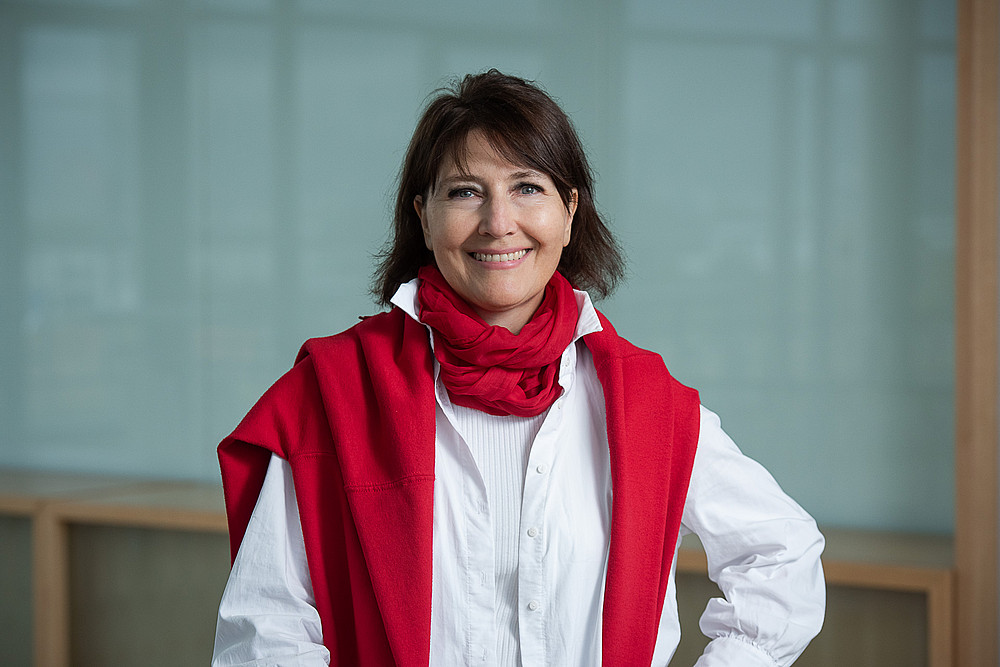
Katharina Brizić
Translating into the unspeakable. How students gain audibility through interpreting
In my talk I will introduce two empirical examples of interpreting activities performed by students in multilingual school contexts in Germany. Each of the examples provides a snapshot of non-professional interpreting activities. They are conducted to and from highly stigmatised languages, with their speakers looking back on histories of persecution, and with professional interpreting services continuing to be largely unavailable to date.
The two school contexts, however, bring about quite contrary results: While in the first case all students’ languages are supported as a resource for learning, the stigmatised language is still avoided at all costs by the interpreting student. In the second case the school lacks awareness and support for multilingualism; and yet, the context not only brings about interpreting activities inclusive of the stigmatised language, but also results in high appreciation for the interpreting student.
The aim of my talk is to gain a better understanding for how histories of languages and speakers still reverberate in the presence; how various institutional dichotomies potentially hinder, or enhance, interpreting activities inclusive of non-prestigious languages; and how the audible and valued presence of these languages can entail institutional – or even societal – effects (not only) for the students and teachers in class.
Katharina Brizić is a professor of multilingualism studies at the University of Freiburg, Germany. Her research interests include language and power, (forced) migration, language biographies, language and trauma, educational inequities, social justice, and multilingual cultures of remembrance. Her quantitative study Multilingual Cities Vienna was the first quantitative home language survey in a central-eastern capital. As part of a multinational consortium she heads the Berlin section of the EU HORIZON project „Strategies to Strengthen European Linguistic Capital in a Globalised World“ (https://multilx.com/project-team/).
Rebecca Tipton
From citizen linguists to…? Why history matters for understanding non-professional translation and interpreting
In this presentation I critically examine the applicability of the label ‘non-professional interpreting and translation’ to situations of interpreting and translation that arose in Britain in the years immediately following the Second World War in state and non-state services. This was a period of acceleration in terms of cultural and language diversity, driven primarily, but not exclusively by postwar reconstruction efforts, and one that demanded a level of planning for language support services that differed substantively to the approach taken in wartime. I explore examples of interpreter and translator recruitment processes, working conditions and reflections - by interpreters and government agents - on their practice. Shining a spotlight on the framing used to describe roles, articulate lived experiences, and monitor practice, I examine the significance of such framing for understanding perceptions of ‘professionalism’ in their historical context.
Rebecca Tipton is a Senior Lecturer in Interpreting and Translation Studies at the University of Manchester at the Centre for Translation and Intercultural Studies. Her research examines professional and non-professional interpreting in statutory and voluntary sector services from contemporary and historical perspectives. She is the author of The Routledge Guide to Teaching Ethics in Translation and Interpreting Education (2024).

Roundtable: NPIT in Austria - Research and Practice
| Organizing Committee |
|---|
| Şebnem Bahadır-Berzig & Nadja Grbić Ines Buchegger Gernot Hebenstreit Barbara Hinterplattner Margit Jandrisits Pekka Kujamäki Azar Najafi Marboyeh Manuela Niederl Raquel Pacheco Aguilar Marie Tschurtschenthaler |
| Scientific Committee | |
|---|---|
| Michaela Albl-Mikasa (Zürich) Philipp Angermeyer (York) Rachele Antonini (Bologna) Letizia Cirillo (Siena) Antoon Cox (Antwerpen) Georgios Floros (Nikosia) Peter Flynn (Antwerpen / Bloemfontain) Laura Gavioli (Modena) Deborah Giustini (Doha / Leuven) Agnes Grond (Graz) Ting Guo (Liverpool) Jim Hlavac (Melbourne) Sari Hokkanen (Tampere) | Mira Kadrić-Scheiber (Wien) Nike Kocijančič Pokorn (Ljubljana) Christina Korak (Graz) Clara López Rodríguez (Granada) Esther Monzó Nebot (Castelló de la Plana) Jemina Napier (Edinburgh) Sonja Pöllabauer (Wien) Regina Rogl (Wien) Jonathan Ross (Istanbul) Vanessa Steinkogler (Graz) Şebnem Susam-Saraeva (Edinburgh) Marija Todorova (Hong Kong) Clara Chuan Yu (Hong Kong) |